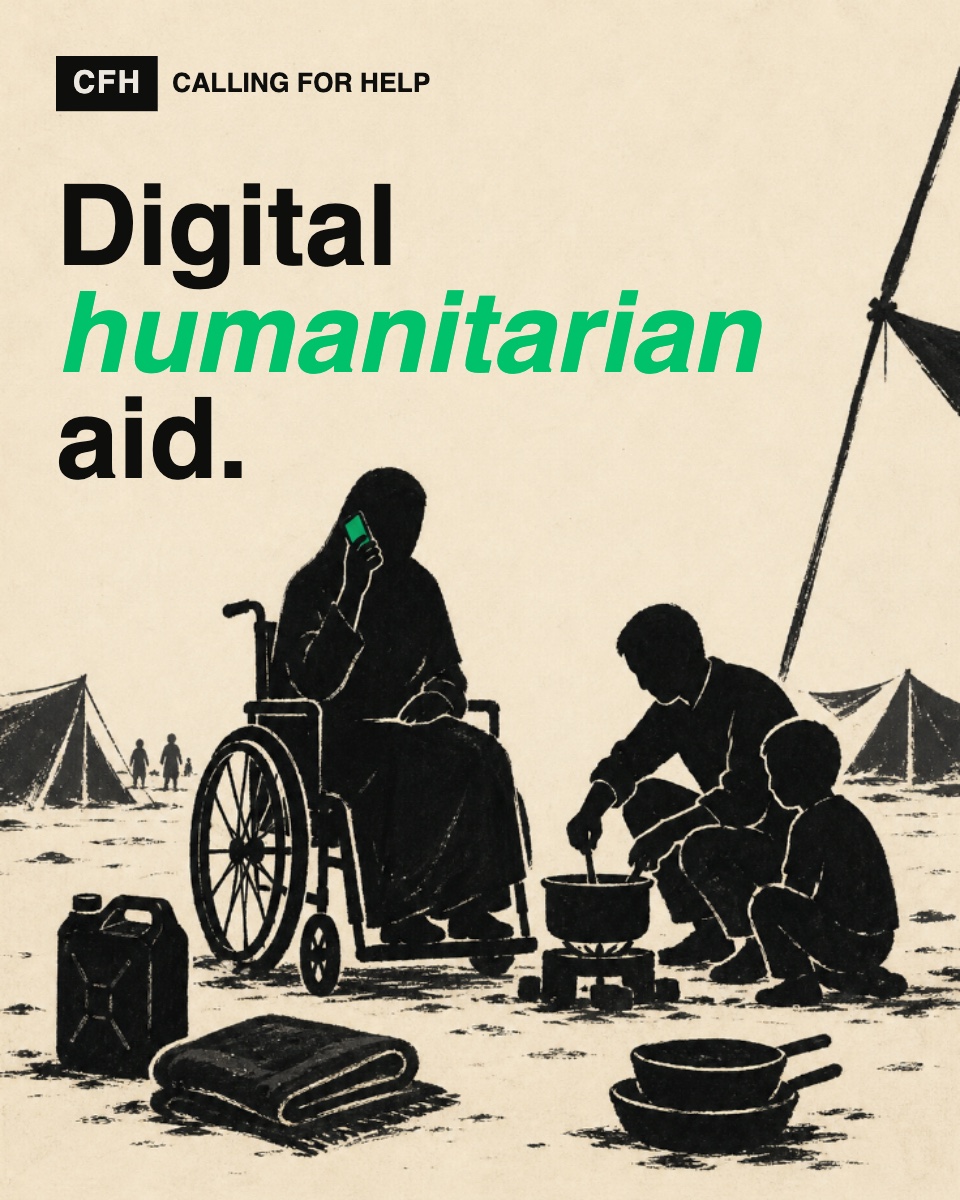
The digital divide hits refugees with disabilities hardest.
97% of UK adults have a smartphone with active data. 29% of the population in conflict-displaced regions of Sudan does. That’s the digital divide in one stat — but the gap inside that 29% is what we’re built around. The refugee with a disability inside Sudan is at the bottom of every layer: poor (can’t afford a top-up), displaced (no fixed address for a SIM in their name), disabled (the phone is the assistive device, not a luxury), and last in the food queue (no leverage in family decisions about who gets the household phone). Connection isn’t a quality-of-life upgrade for these refugees — it’s digital equality, and it lets them reach the aid systems that are already in place.
— 01
What “digital divide” actually means in a camp.
The standard framing is: rich countries have lots of bandwidth, poor countries have less. That’s true at the national scale and useless at the individual level. Inside a refugee camp, the digital divide breaks along these specific lines:
- Device access — does the refugee personally own, or have shared access to, a smartphone capable of running the apps they need?
- SIM access — can they get a SIM card in their own name, in the country they’re in, with the documents they have?
- Credit/data access — can they keep that SIM topped up?
- Power access — is there electricity to charge the phone? In Sudan, this is sometimes the binding constraint.
- Coverage access — does the tower reach the part of the camp they live in?
Refugees with disabilities fall through every layer of this disproportionately. They can’t always afford their own device. They can’t always queue for SIM registration. They can’t always reach the charging point at the camp store. They live in the parts of the camp the network doesn’t reach, because they live where the truck doesn’t go.
— 02
Why phone credit is the cheapest layer to fix.
Devices, SIMs, power infrastructure, towers — all of those need physical builds, capital expenditure, partnerships, regulators. Credit doesn’t. A €5 top-up via a top-up API is the only one of these that scales globally with one transaction. We can’t put a tower in your camp. We can’t build a charging station. We can’t ship a smartphone past customs. We can put credit on the phone you already own. Once the credit is there, the rest of the digital divide is at least somewhat navigable — most of the time.
— 03
97% vs 29% — the underlying stat.
The 97% is the UK Office for Communications 2024 figure. The 29% is from the GSMA Mobile Economy Sub-Saharan Africa report combined with internal Sudanese mobile penetration data after the conflict began. Both figures are conservative — the refugee with a disability subset of the 29% is closer to 12-15%.
The digital divide is fixable in the layer where it matters most: keep the phone topped up.
The newsletter is different.
Real reports from refugees with disabilities, separate from this blog. We’re building the first edition now. Subscribe to be on the list when it lands.
Newsletter
Subscribe.
Reports from refugees with disabilities, sent occasionally. No fundraising, no spam, unsubscribe in one click.