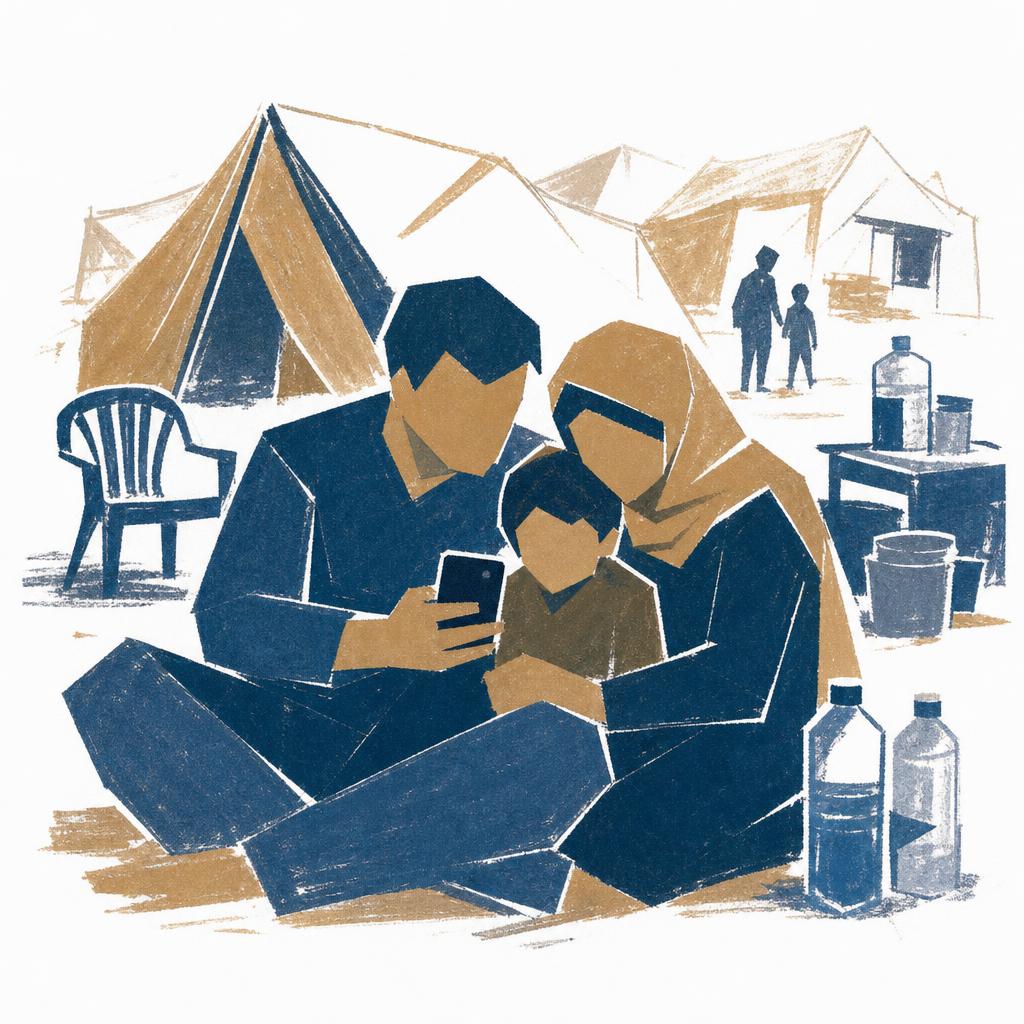
Nearly three in ten refugee households own no mobile phone whatsoever. The GSMA and UNHCR’s 2019 research exposes this stark reality: 29% of displaced families live completely cut off from the digital threads that connect everyone else to safety, services, and survival.
When Isolation Becomes Dangerous
Without phones, refugees with disabilities face double jeopardy. They can’t receive emergency alerts about violence in their camps. They miss health appointments because clinics can’t reach them. Job opportunities slip past unnoticed. Family members scattered across continents remain ghosts. The woman who uses a wheelchair and can’t walk to the aid distribution point has no way to request assistance. The man with hearing loss misses the audio announcements that could save his life.
Credit Shortage Deepens the Divide
Even refugees who own phones often can’t afford to use them. Airtime costs consume budgets already stretched beyond breaking point. A father with diabetes might choose between insulin and calling for medical help. The digital divide hits hardest when you’re counting every penny for food. Phone ownership means nothing without credit to make it work.
Breaking Through the Silence
Mobile credit changes everything for refugees with disabilities who’ve found themselves voiceless. It transforms a silent device into a lifeline. Emergency contacts become reachable. Health services become accessible. Community connections become possible again. Free mobile credit doesn’t solve displacement, but it restores the basic human right to communicate when everything else has been stripped away.