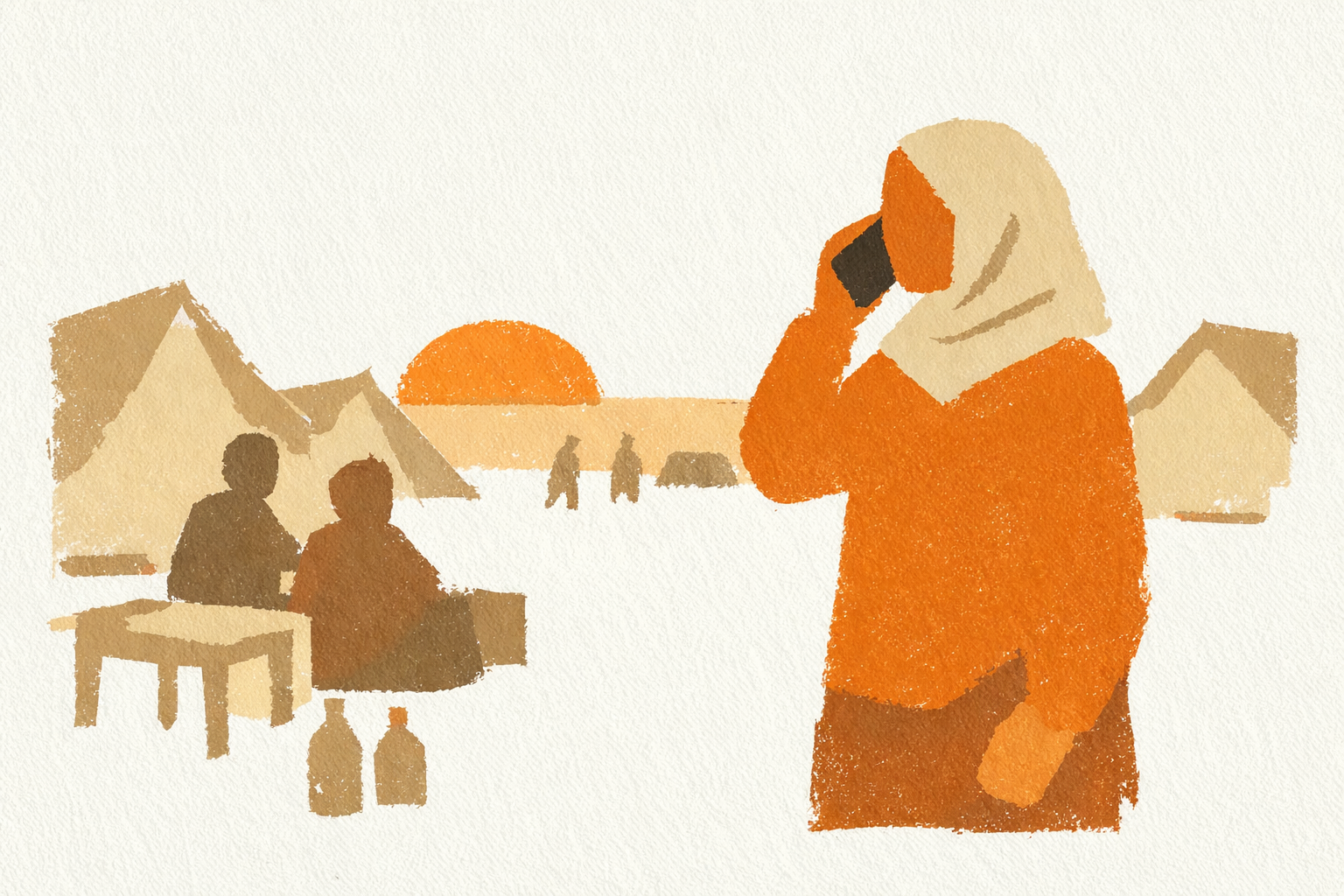
A woman refugee with disabilities faces three walls to financial services: lack of legal documentation, disability discrimination, and gender bias. Banks demand proof of residence she cannot provide. Staff refuse service when they see her wheelchair. Traditional banking interfaces ignore her visual impairment entirely.
Mobile money is smashing through these barriers – but only for those with active phone credit.
Triple Exclusion Locks Women Out
Women refugees with disabilities encounter compounded discrimination in formal financial services. Banks require documentation 73% of refugee women lack, according to UNHCR data from 2023. Even with papers, disability stigma creates additional hurdles.
Sarah, a blind accountant from Syria now in Lebanon, walked into six banks seeking basic services. ‘They saw my guide dog and assumed I was incapable of managing money,’ she reports. Traditional banking interfaces – from ATMs to forms – exclude people with visual, mobility, or cognitive impairments.
Gender compounds these barriers. Research by the Women’s Refugee Commission found women refugees 47% less likely than men to access formal banking, even in identical circumstances.
Phone Credit Unlocks Financial Freedom
Mobile money platforms bypass traditional gatekeepers. M-Pesa in Kenya, Orange Money across francophone Africa, Wave in Senegal, and Telcash in Somalia require minimal documentation – often just a phone number and basic ID.
These apps connect women to microfinance groups, diaspora remittances, and small business payments. A study in Uganda found women using mobile money increased household income by 17% compared to cash-only peers.
For women with disabilities, phone connectivity enables financial participation impossible through traditional channels. Voice commands replace inaccessible touchscreens. Mobile payments eliminate transport barriers to physical banks.
The Gender Equality Multiplier
Phone credit does more than enable transactions – it multiplies women’s economic agency. Active mobile money accounts let women save privately, invest in education, and build credit histories independent of male relatives.
Research from Rwanda shows women with mobile money accounts 19% more likely to start businesses than those relying on cash. They control household finances and make autonomous economic decisions.
But this liberation depends entirely on maintaining phone credit. When accounts go dormant due to connectivity gaps, women lose access to their financial networks and accumulated digital trust.
Phone credit transforms from basic necessity to economic lifeline for women refugees with disabilities seeking financial independence.
Apply for phone credit support to maintain your connection to mobile financial services.
What’s really happening to women with disabilities in refugee camps — and how we’re getting them a direct line to safety.
Twice a month. Real situations. 3-minute read.
Learn more about what it’s like inside a refugee camp — read previous updates