Category: Intersectionality

  • 67% of Afghan Refugees with Disabilities can’t access Pakistan’s Mobile Networks

    67% of Afghan Refugees with Disabilities can’t access Pakistan’s Mobile Networks

    Pakistani telecom regulations have severed mobile connectivity for two-thirds of Afghan refugees with disabilities, creating a digital barrier between 208,000 vulnerable adults and life-saving humanitarian services. UNHCR data shows 73% of Afghan refugees with disabilities lack proper legal documentation – the very papers now required for SIM card registration across Pakistan.

    Biometric Barriers Block Basic Connectivity

    Pakistan’s telecommunications framework demands biometric verification for all mobile connections, but Afghan refugees with disabilities find themselves caught in regulatory limbo. Without valid documentation, they cannot register SIM cards. Without active phone lines, they cannot access the humanitarian cash transfers that 91% rely on, according to Humanity & Inclusion research. The mathematics are stark: 1.3 million registered Afghan refugees live in Pakistan, with an estimated 208,000 adults experiencing disabilities based on UNHCR prevalence data.

    Women Face Double Documentation Barriers

    Afghan women with disabilities encounter compounded exclusion. Taliban policies prevent them from obtaining documentation independently, while Pakistan’s recent requirements for valid papers create additional hurdles. This intersection leaves women with disabilities particularly isolated from digital services that humanitarian organisations increasingly use for programme delivery. Mobile financial services require both legal status and active connectivity – two prerequisites these women cannot meet.

    Emergency Credit Programmes Navigate Complex Rules

    Organisations providing emergency mobile credit must work within Pakistan’s regulatory framework while reaching undocumented populations. The challenge is technical and legal: how to maintain connectivity for people the system is designed to exclude. Mobile credit programmes become critical infrastructure when traditional documentation pathways fail, though they must operate carefully within telecom regulations that prioritise security over humanitarian access.
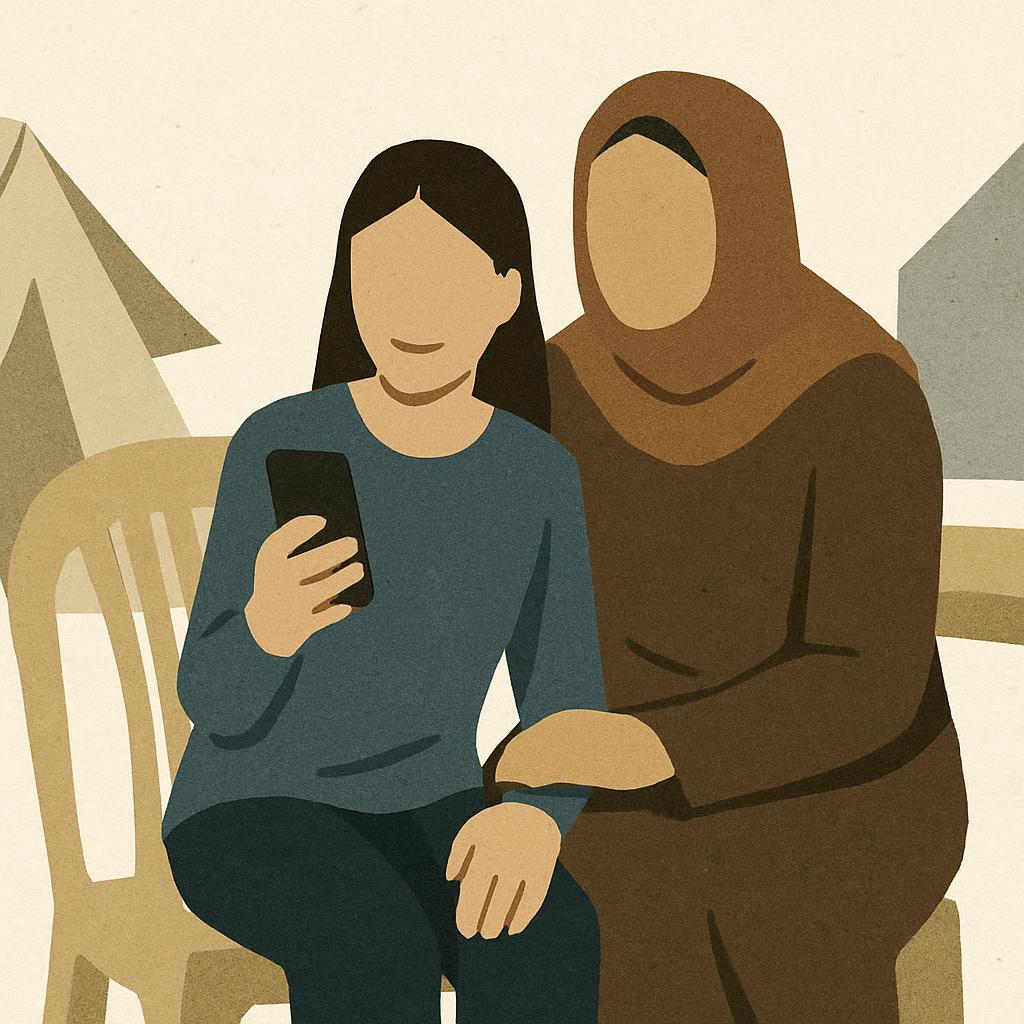
  • Colombian SIM Cards Lock Out 464,000 Venezuelan Refugees

    Colombian SIM Cards Lock Out 464,000 Venezuelan Refugees

    Nearly half a million Venezuelan adults with disabilities live in Colombia today, cut off from mobile networks by bureaucratic barriers that would make Kafka weep. They fled a collapsed state only to discover that proving who you are—and what you need—requires papers that exist only in memory.

    The Documentation Trap

    Colombia hosts 2.9 million Venezuelan refugees, with adults with disabilities making up 16% of this population. But Colombian mobile operators demand identity documents for SIM card purchases, while disability benefits require medical assessments that undocumented migrants cannot access. The result: adults with disabilities face a double exclusion. They cannot prove their identity to buy phone service, nor can they prove their disability status to access support programmes. Many lost Venezuelan identity documents during flight, while Colombian disability cards require formal medical evaluations unavailable to those without legal status.

    Beyond Banking Networks

    The Inter-American Development Bank found 89% of Venezuelan migrants use informal remittance channels because formal systems reject them. But adults with disabilities often lack the social connections these informal networks require. UNHCR calls these ‘invisible barriers’—systemic exclusions that compound displacement with isolation. Digital connectivity becomes unreachable precisely when it matters most: when you need to contact family, access services, or simply prove you exist.

    Anonymous Credit, Direct Access

    Phone credit distribution sidesteps identity verification entirely. Prepaid credit requires no registration, no documents, no medical assessments. It transforms smartphones into lifelines without bureaucratic gatekeeping. While Colombian networks maintain their documentation requirements for new accounts, anonymous phone credit programmes can restore connectivity to adults with disabilities who fell through every other safety net. The papers might be gone, but the phone can still ring.

  • 43,000 Adults Disabled by Climate Disasters Face Double Crisis

    43,000 Adults Disabled by Climate Disasters Face Double Crisis

    Category 5 cyclones tore through Madagascar last year, leaving 43,000 adults with permanent disabilities among 180,000 climate migrants. Pakistan’s superfloods created 67,000 adult amputees now scattered across displacement camps. These aren’t statistics from separate crises — they’re snapshots of climate change manufacturing a new category of refugees with disabilities.

    When Weather Creates Permanent Wounds

    WHO data reveals adults injured in climate disasters are 4.7 times more likely to develop long-term disabilities compared to conflict-related injuries. The difference isn’t just medical — it’s systemic. A father loses his leg to cyclone debris, then loses his home to storm surge. A woman develops severe PTSD after watching floods destroy her village, then can’t access mental health care because she’s living in a tent. Traditional displacement responses weren’t designed for people navigating fresh trauma and new impairments simultaneously.

    Old Systems, New Disabilities

    UNHCR’s identification systems struggle with climate-disabled refugees. Forms designed for established disabilities don’t capture trauma-induced cognitive impairments or the complex grief of losing both home and physical function. A wheelchair user who’s been navigating barriers for decades has different needs than someone who lost mobility three weeks ago in a hurricane. These newly disabled adults lack support networks, assistive technology knowledge, and often the vocabulary to describe their needs to aid workers.

    Phone Lines to New Lives

    Mobile connectivity becomes the bridge between isolation and adaptation. Telehealth consultations help adults understand their new conditions without traveling to overcrowded medical facilities. Disability community forums provide peer support from others who’ve walked similar paths. Video calls with occupational therapists teach basic daily living skills. Free mobile credit means a recent amputee can join online support groups, a trauma survivor can access mental health apps, and a father with new mobility needs can research assistive technologies for his children.

  • 42% of Women with Disabilities Face Double Discrimination

    42% of Women with Disabilities Face Double Discrimination

    Women with disabilities encounter discrimination at twice the rate of their male counterparts, with 42% reporting barriers that stack gender bias on top of disability prejudice. For refugee women, this double burden becomes triple when cultural restrictions limit their movement and communication.

    Male Guardianship Blocks Digital Access

    In many displaced communities, women need male permission to own phones or access internet services. Research from Jordan’s Zaatari camp shows 73% of women with disabilities have no independent access to digital communication. They cannot privately contact support services, report abuse, or connect with other women facing similar challenges. A phone credit top-up becomes more than connectivity – it becomes autonomy.

    Private Channels Break Isolation

    Sarah, a wheelchair user from Damascus now in Lebanon, describes her phone as her ‘secret lifeline.’ Through WhatsApp groups and disability rights apps, she connects with other women, shares resources about accessible housing, and receives mental health support without family interference. She applies monthly through our application system because consistent credit means consistent independence. When women control their own communication, they control their own advocacy.

    Networks Build Resilience

    Women with disabilities create powerful mutual aid networks when given private communication channels. They share information about accessible services, warn each other about discrimination, and provide emotional support across borders. These digital communities often become more reliable than formal support systems. Our mission focuses on ensuring these conversations never go silent due to empty phone credit.

  • Taliban Blocks 83% of Afghan Women with Disabilities from Services

    Taliban Blocks 83% of Afghan Women with Disabilities from Services

    Taliban regulations require Afghan women to travel with a male guardian for journeys over 75 kilometres. For women with disabilities, this doubles an already impossible barrier to accessing basic services.

    Mahram Rules Create Prison Conditions

    The mahram requirement means women with disabilities cannot reach government offices, health centres, or aid distribution points without a male relative’s permission and presence. Many families refuse these requests, citing shame or inconvenience. In Kabul, UN Women reported that 83% of women with disabilities have lost access to essential services since August 2021. Women who use wheelchairs face additional transport costs their guardians often won’t cover. The result: total isolation from systems designed to help them.

    Phone Credit Bypasses Guardian Control

    Mobile phone top-ups provide a rare channel for autonomous access when physical movement is restricted. Women with disabilities use credit to contact aid organisations directly, arrange remote consultations with health workers, and access digital banking services. One woman in Herat told researchers she uses her phone to coordinate medication deliveries, bypassing her brother’s refusal to escort her to the pharmacy. Digital connectivity becomes survival infrastructure when public spaces are forbidden territory.

    Direct Contact Replaces Blocked Journeys

    Public registration for disability benefits and humanitarian aid now requires male accompaniment at every stage. Women with disabilities report waiting months for male relatives to agree to these trips, only to be turned away for missing documentation their guardians forgot to bring. Phone credit allows direct contact with case workers who can guide the process remotely and arrange home visits where possible. When movement itself becomes criminalized, mobile connectivity transforms from convenience to lifeline for women trapped at home.

  • LGBTQ+ refugees face triple threat of discrimination

    LGBTQ+ refugees face triple threat of discrimination

    Ahmed fled Syria because he’s gay. He uses a wheelchair after shrapnel damaged his spine. In his new country, he faces three forms of discrimination: xenophobia for being a refugee, homophobia for his sexuality, and ableism for his disability. His phone connects him to the only LGBTQ+ helpline that operates in Arabic.

    Intersection creates invisible crisis

    LGBTQ+ refugees with disabilities exist at the crossroads of multiple marginalised identities. UK research shows 64% of LGBTQ+ refugees report harassment in accommodation centres. When disability enters the mix, isolation deepens. Physical barriers prevent access to community spaces. Communication barriers block access to information. The digital divide means many can’t reach online support networks that might understand their complex needs.

    Mobile phones become safety networks

    Specialized LGBTQ+ refugee organizations like Rainbow Railroad and Micro Rainbow operate confidential helplines. But only if you can afford to call them. A 20-minute call to report abuse or seek emergency housing costs £15-20 on some networks. For someone receiving £40 weekly asylum support, that’s impossible. Mobile credit removes this barrier, creating direct access to advocates who understand the unique vulnerabilities of LGBTQ+ refugees with disabilities.

    Protection services adapt to phone-first world

    Progressive organizations now offer WhatsApp support, encrypted messaging, and scheduled callback services. The European LGBTI Refugees and Asylum Network coordinates across 15 countries via mobile apps. These services recognize that traditional face-to-face support isn’t always safe or accessible for people facing multiple forms of discrimination. Phone connectivity becomes the bridge to specialized protection.

    LGBTQ+ refugees with disabilities need more than basic accommodation. They need advocates who understand intersectional discrimination. If you’re an adult refugee with disabilities struggling to access LGBTQ+ support services, apply for mobile credit to connect with specialized protection networks.

  • Mobile Money Breaks Banking Barriers for Women Refugees

    Mobile Money Breaks Banking Barriers for Women Refugees

    A woman refugee with disabilities faces three walls to financial services: lack of legal documentation, disability discrimination, and gender bias. Banks demand proof of residence she cannot provide. Staff refuse service when they see her wheelchair. Traditional banking interfaces ignore her visual impairment entirely. Mobile money is smashing through these barriers – but only for those with active phone credit.

    Triple Exclusion Locks Women Out

    Women refugees with disabilities encounter compounded discrimination in formal financial services. Banks require documentation 73% of refugee women lack, according to UNHCR data from 2023. Even with papers, disability stigma creates additional hurdles. Sarah, a blind accountant from Syria now in Lebanon, walked into six banks seeking basic services. ‘They saw my guide dog and assumed I was incapable of managing money,’ she reports. Traditional banking interfaces – from ATMs to forms – exclude people with visual, mobility, or cognitive impairments. Gender compounds these barriers. Research by the Women’s Refugee Commission found women refugees 47% less likely than men to access formal banking, even in identical circumstances.

    Phone Credit Unlocks Financial Freedom

    Mobile money platforms bypass traditional gatekeepers. M-Pesa in Kenya, Orange Money across francophone Africa, Wave in Senegal, and Telcash in Somalia require minimal documentation – often just a phone number and basic ID. These apps connect women to microfinance groups, diaspora remittances, and small business payments. A study in Uganda found women using mobile money increased household income by 17% compared to cash-only peers. For women with disabilities, phone connectivity enables financial participation impossible through traditional channels. Voice commands replace inaccessible touchscreens. Mobile payments eliminate transport barriers to physical banks.

    The Gender Equality Multiplier

    Phone credit does more than enable transactions – it multiplies women’s economic agency. Active mobile money accounts let women save privately, invest in education, and build credit histories independent of male relatives. Research from Rwanda shows women with mobile money accounts 19% more likely to start businesses than those relying on cash. They control household finances and make autonomous economic decisions. But this liberation depends entirely on maintaining phone credit. When accounts go dormant due to connectivity gaps, women lose access to their financial networks and accumulated digital trust. Phone credit transforms from basic necessity to economic lifeline for women refugees with disabilities seeking financial independence. Apply for phone credit support to maintain your connection to mobile financial services.

    What’s really happening to women with disabilities in refugee camps — and how we’re getting them a direct line to safety.

    Twice a month. Real situations. 3-minute read.

    Learn more about what it’s like inside a refugee camp — read previous updates