Author: Calling for Help

  • Registration Offices Block 73% of Refugees with Disabilities

    Registration Offices Block 73% of Refugees with Disabilities

    Seventy-three percent of refugees with disabilities cannot reach government registration offices to obtain identity documents, according to UNHCR data. Inaccessible buildings, broken lifts, and non-existent transport create an impossible maze between displaced people and the papers they need to survive.

    The Documentation Dead End

    A Syrian father using a wheelchair sits outside Amman’s refugee registration centre. No ramp. No accessible entrance. No way in. Without identity documents, he can’t open a bank account, access formal employment, or register for a SIM card. The digital divide widens when the first step – proving who you are – becomes unreachable. Environmental barriers don’t just block buildings. They block entire futures.

    Mobile Credit Cuts Through Red Tape

    Phone connectivity becomes the workaround when official systems fail. Refugees with disabilities use mobile credit to contact legal aid organisations, reach disability support groups, and coordinate with advocates who can navigate registration bureaucracy on their behalf. One woman with cerebral palsy in Lebanon used her phone to connect with a local NGO that eventually helped her obtain documentation through home visits. Her mobile lifeline bypassed months of architectural exclusion.

    Breaking the Barrier Chain

    CFH’s mobile credit doesn’t solve inaccessible buildings, but it creates alternative pathways to essential services. When you can’t physically reach the registration office, your phone becomes your advocate, translator, and connection to people who can help. Apply for mobile credit and turn connectivity into your tool for overcoming environmental barriers.
  • 120,000 Rohingya with Disabilities Cut Off from Digital World

    120,000 Rohingya with Disabilities Cut Off from Digital World

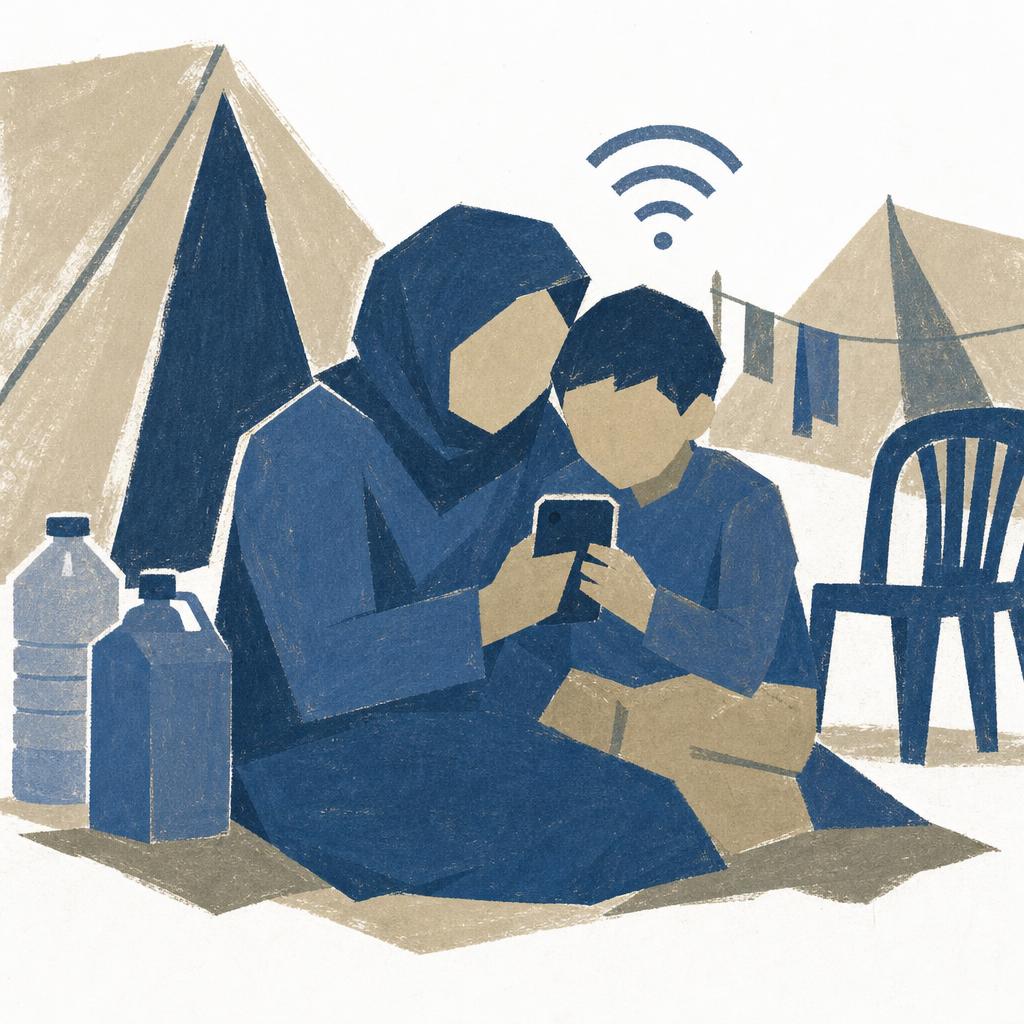
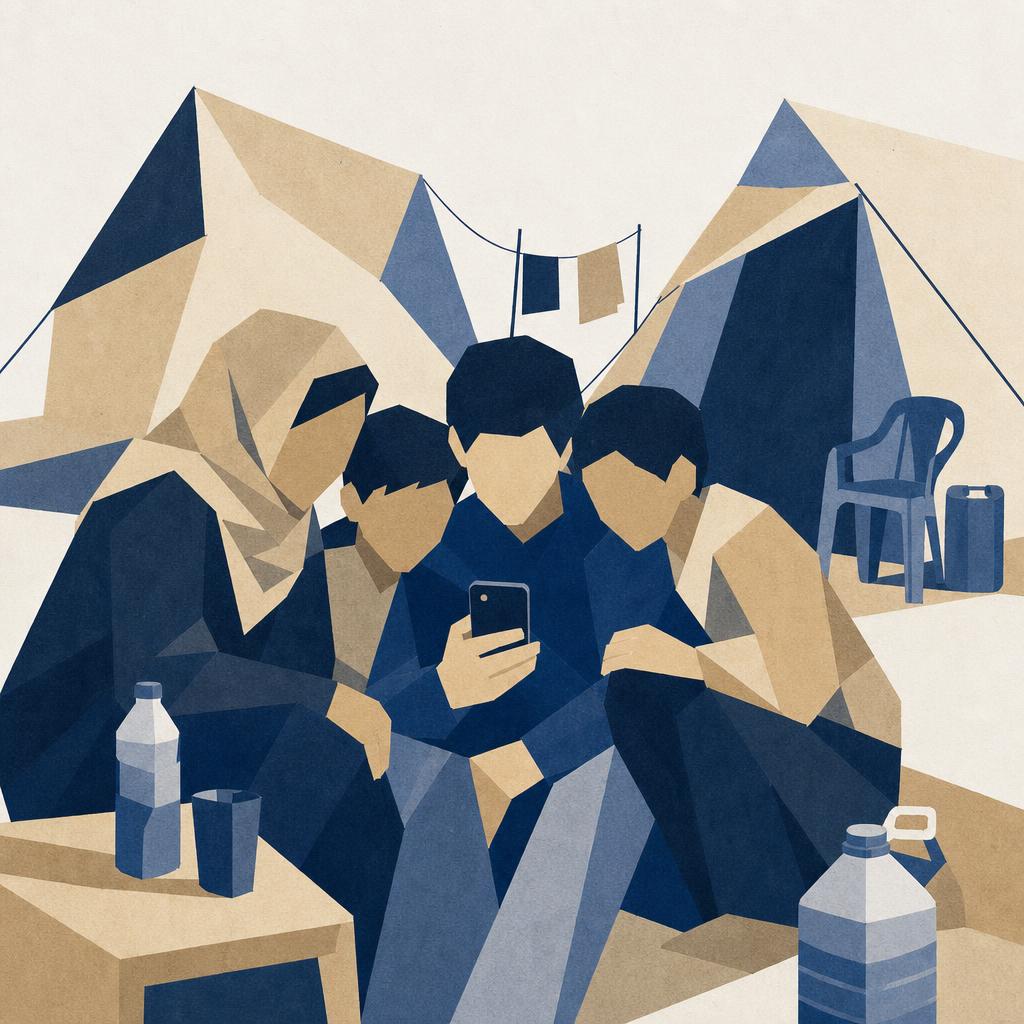
    Over one million Rohingya refugees crowd into Cox’s Bazar camps in Bangladesh, where 120,000 people with disabilities face a double barrier: displacement and digital exclusion. The Bangladesh government’s ban on SIM card ownership for refugees has severed their connection to the outside world, cutting off access to healthcare information, educational resources, and family networks that could mean the difference between isolation and survival.

    Digital Ban Compounds Physical Barriers

    The 12% of camp residents living with disabilities already navigate overcrowded conditions with limited accessible infrastructure. Without phone connectivity, a wheelchair user can’t call for medical assistance during emergencies. A person with visual impairments can’t access audio information about food distribution schedules. These connectivity gaps turn manageable challenges into insurmountable walls, particularly for refugees with disabilities who rely heavily on communication networks to coordinate care and support.

    Phone Credit as Lifeline

    Mobile phones represent more than communication devices in refugee camps—they’re survival tools. Refugees with disabilities use phones to contact healthcare providers, access translated medical information, and maintain connections with support networks. CFH’s mobile credit distribution directly addresses this gap, ensuring that displaced people with disabilities can maintain these critical digital connections despite government restrictions on SIM ownership.

    When digital exclusion meets disability discrimination, the result is profound isolation. Mobile credit breaks through both barriers simultaneously. Apply for support if you’re a refugee with disabilities needing connectivity assistance.

  • Half of Refugees with Disabilities Cut Off from Internet

    Half of Refugees with Disabilities Cut Off from Internet

    Refugees with disabilities are 50% less likely to have internet access than the general population, according to 2019 research from the GSMA mobile industry association. This stark gap means millions of displaced adults with disabilities remain isolated from the digital lifelines that could transform their circumstances.

    The Numbers Behind the Digital Divide

    The GSMA study tracked connectivity across refugee settlements and urban displacement contexts globally. While internet penetration has grown in many regions, refugees with disabilities consistently lag behind. The 50% deficit isn’t just about slower adoption—it reflects compounding barriers including poverty, inaccessible technology, and limited infrastructure in displacement settings.

    When Disconnection Means Danger

    Without internet access, refugees with disabilities can’t reach humanitarian databases, register for services, or maintain contact with support networks. A blind refugee in Lebanon can’t access audio-enabled job platforms. A deaf asylum seeker in Germany misses critical appointment notifications sent via messaging apps. These aren’t inconveniences—they’re barriers to survival and integration that deepen existing vulnerabilities.

    Mobile Credit as Digital Medicine

    Phone credit removes the immediate financial barrier to connectivity. When CFH tops up a mobile account, that adult with disabilities gains access to WhatsApp calls with family, government service portals, and emergency contacts. It’s direct intervention in the digital divide. Applications are open for refugees with disabilities who need this connection restored.

  • Sudan funding drops 73% as 1.2m refugees with disabilities lose out

    Sudan funding drops 73% as 1.2m refugees with disabilities lose out

    Sudan’s refugee funding has collapsed by nearly three-quarters this year, with monthly per capita support crashing from $11 to just $4. The financial freefall hits hardest among the 1.2 million refugees with disabilities, who now face impossible choices between food, shelter, and staying connected to the world.

    Communication becomes luxury as basic needs compete

    When your monthly allowance barely covers a loaf of bread, mobile phone credit becomes an unaffordable luxury. Yet for refugees with disabilities, that phone connection often serves as their primary link to healthcare appointments, family networks, and emergency services. The funding cuts force people to choose between eating and calling for help when they need it most. Many simply go silent.

    Isolation deepens as support networks fracture

    The digital divide widens when people cannot afford basic connectivity. Refugees with disabilities who relied on mobile apps for navigation assistance, translation services, or coordinating care now find themselves increasingly isolated. Support groups that once connected through messaging apps dissolve when members cannot maintain their phone service. The psychological toll compounds the physical challenges they already face.

    Mobile credit fills critical gaps

    Free mobile phone credit does not solve Sudan’s funding crisis, but it does restore one essential lifeline. When a wheelchair user can call their doctor, or someone with vision loss can access audio news updates, or a refugee with hearing difficulties can text their caseworker, communication barriers start to crumble. Apply for phone credit if you are a refugee with disabilities who needs to stay connected.

  • Colombia’s SIM card ban traps Venezuelan refugees offline

    Colombia’s SIM card ban traps Venezuelan refugees offline

    María, a 52-year-old Venezuelan refugee with cerebral palsy, holds a dead phone outside Bogotá’s immigration office. She’s been in Colombia for three years but can’t buy a SIM card without permanent residency – a document she’ll never qualify for because her disability pension doesn’t meet income requirements.

    Legal residents only rule blocks basic connectivity

    Colombia requires permanent residency or a Colombian ID to purchase SIM cards from major carriers. Venezuelan refugees typically hold temporary protection status, which doesn’t qualify. The process for permanent residency takes 18-24 months and requires proof of stable income – impossible for most refugees with disabilities who can’t work legally. Without SIM cards, they can’t access Colombia’s digital aid systems, bank accounts, or emergency services. Pre-paid cards from street vendors work sporadically and cost triple the official rates.

    Digital government, analogue exclusion

    Colombia moved all refugee services online in 2023. Disability benefits, food vouchers, and medical appointments require smartphone verification through official apps. These systems demand Colombian phone numbers for two-factor authentication. Refugees with disabilities face a cruel paradox: they can’t get phones to access the digital services that might help them afford phones. The government’s efficiency drive has created systematic exclusion for the most vulnerable populations.

    Community networks fill the void

    When official systems fail, phone connectivity through informal channels becomes survival infrastructure. Refugees share devices, use café WiFi, and rely on advocacy groups for communication. Free mobile credit helps bridge these gaps, keeping people connected to support networks that understand their needs when governments build digital walls around basic services.

  • Ukraine’s Shelters Fail People with Disabilities

    Ukraine’s Shelters Fail People with Disabilities

    Nine out of ten bomb shelters across Ukraine cannot accommodate a wheelchair. As air raid sirens wail through Kyiv, Kharkiv, and Dnipro, people with disabilities face an impossible choice: risk staying above ground or attempt to navigate basement stairs they cannot manage.

    Digital Maps Replace Accessible Infrastructure

    Andriy, a wheelchair user from Mariupol, survived the siege by using his Nokia’s GPS to locate the few accessible underground stations in the city. ‘I mapped every ramp, every wide entrance,’ he told researchers. His phone battery died three times during the worst bombardments. Without mobile connectivity, navigation apps that show accessible routes become useless screens. Government emergency broadcasts, family coordination, and real-time shelter updates all depend on staying connected.

    Phone Credit Determines Who Reaches Safety

    The data is stark and foreboding if you have a disability. Ukraine’s State Emergency Service reports 25,000 official shelters nationwide. Fewer than 2,500 meet basic accessibility standards. For the estimated 2.7 million Ukrainians with disabilities, mobile navigation represents the difference between finding safety and being trapped in active conflict zones. Calling For Help provides emergency phone credit specifically for situations like these – when connectivity determines survival, not convenience.

    When a person with a disability decides to stay in their home instead of a shelter they are obviously at higher risk of injury or death, an unfortunate reality is that their carer will often stay with them too and also become injured compacting the problem of accessing support.

    We provide disabled people with phone credit to prevent these situations, so they can call for help and connect with evacuation services able to get them to shelter.

    Read how we send free phone credit to refugees with a disability.

  • 12.4 Million Refugees with Disabilities Face ID Document Barriers

    12.4 Million Refugees with Disabilities Face ID Document Barriers

    Twelve and a half million refugees with disabilities can’t prove who they are. That’s one in seven of the world’s 82.4 million forcibly displaced people, according to UNHCR data, locked out of basic services because they lack identity documents.

    Registration Offices Built for the Able-Bodied

    Getting an ID card requires navigating bureaucratic mazes that weren’t designed for wheelchair users or people with visual impairments. Registration offices perch on second floors without lifts. Forms come in single languages, printed in fonts too small to read. Staff lack training in sign language or alternative communication methods. A woman fleeing Syria with mobility issues faces the same complex paperwork as everyone else, but with stairs blocking her path to the counter.

    No Papers, No Phone Service

    Mobile networks demand identity documents before activating SIM cards — a security measure that creates a catch-22 for refugees with disabilities. Without phones, they can’t contact legal aid organisations, disability rights groups, or documentation services that might help them navigate the system. The very tool that could connect them to solutions remains out of reach because they lack the papers those solutions could help them obtain.

    Credit Breaks the Deadlock

    Free mobile credit sidesteps this bureaucratic trap. Refugees with disabilities can use borrowed phones or shared devices to reach organisations specialising in documentation assistance. They can access online guides, contact interpreters, or coordinate with advocates who understand both refugee law and disability rights. Our phone credit doesn’t solve the documentation crisis, but it opens the communication channel that makes solutions possible.

  • Uganda cuts 42% of families from food aid programmes

    Uganda cuts 42% of families from food aid programmes

    Uganda’s new food aid system has locked out 42% of households with people with disabilities, according to fresh research from Humanity & Inclusion. The World Food Programme’s revised categorisation rules mean nearly half of these families now receive nothing.

    Phone credit becomes survival currency

    Without mobile connectivity, these excluded families can’t challenge decisions or track aid distributions. A father with cerebral palsy in Kampala’s Kisenyi settlement told researchers he missed three appeal deadlines because he couldn’t afford phone credit to call the WFP helpline. His family of five went without food parcels for two months. Digital exclusion directly translates to hunger when bureaucratic systems move online.

    WFP categories create new barriers

    The programme’s tightened eligibility criteria particularly hit households where disability affects work capacity. Officials now require extensive documentation that many refugees with disabilities cannot provide or navigate. Phone access becomes critical for understanding new requirements, booking assessment appointments, and following up on applications. Without it, families with disabilities fall through administrative cracks that weren’t there before.

    Mobile credit can’t replace food aid, but it enables people with disabilities to fight for what they’re owed. CFH’s phone credit helps refugees with disabilities stay connected to the systems that determine whether their families eat.

  • Rohingya Food Vouchers reduced to $6 a month as Crisis Deepens

    Rohingya Food Vouchers reduced to $6 a month as Crisis Deepens

    The World Food Programme announced in March 2025 it’s slashing food vouchers for Rohingya refugees from $12.50 to just $6 per person monthly. The 52% cut stems from what WFP calls ‘critical funding shortfalls’ — bureaucratic speak for donors looking elsewhere whilst nearly one million people face deeper hunger.

    Refugees with Disabilities Hit Twice

    This reduction strikes refugees with disabilities particularly hard. A wheelchair user has less possibilities for work and additional income for food. Losing half your food budget isn’t just hunger, it’s a health emergency. It forces dependency and reliance on others which increases the risks of exploitation and abuse. The intersection of disability and displacement creates compounding vulnerabilities that puts people with a disability in direct danger.

    Phone Credit Becomes Lifeline

    With less money for food, refugees with disabilities can’t budget for phone credit. Yet staying connected becomes more crucial when you’re navigating a community in crisis and worsening malnutrition whilst managing a chronic condition. A phone call to a support worker about increased support, safety, medical adjustments are all inaccessible to most refugess with a disability. The digital disability gap is real and connection is protection. A text to family abroad for emergency funds. These phone calls or texts aren’t luxuries — they’re survival tools. Our mobile credit programme removes one barrier when everything else is crumbling and agencies are cutting budgets in the face of lack of funding.

    Numbers Don’t Lie

    The Rohingya camps house roughly 36,000 people with disabilities according to UNHCR data. Each faces this voucher cut whilst dealing with limited accessible healthcare, inadequate assistive devices, and now deeper food insecurity. Phone connectivity offers a thread to support networks that can mean the difference between managing a condition and watching it deteriorate.

    As with every refugee camp Applications from Cox’s Bazar refugees remain open for 2026.

  • Tigray’s 336,000 disabled adults cut off from digital aid

    Tigray’s 336,000 disabled adults cut off from digital aid

    Two years without phones or internet has left 336,000 adults with conflict-related disabilities in Ethiopia’s Tigray region unable to navigate the digital systems now required to receive aid. The telecommunications blackout from 2020-2022 didn’t just cut communication—it severed an entire generation of disabled adults from digital literacy training and adaptive technologies they desperately needed.

    Digital exclusion hits hardest after conflict

    Today, 84% of adult refugees and internally displaced people with disabilities in Tigray can’t use humanitarian apps or access mobile money services. Traditional literacy programs systematically exclude adults with intellectual disabilities, while digital interfaces remain inaccessible to blind and deaf users. The Ethiopian government’s new requirement for all humanitarian apps to support Amharic and Tigrinya languages has made things worse—screen readers struggle with these scripts, creating another barrier for adults who’ve already lost so much.

    Phone credit opens doors to voice-based services

    Mobile credit becomes crucial when it provides access to simplified, voice-based services that work around different disability types and literacy levels. But connectivity comes at a brutal cost in post-conflict Tigray—mobile data prices remain 300% higher than before the war due to infrastructure damage. Adults with amputations from artillery strikes, traumatic brain injuries, and conflict-related blindness need targeted phone credit programs that include digital literacy components, ensuring they can actually use their connectivity for medical appointments, aid services, and finding family members.

    Without phone access, these 336,000 adults remain invisible to digital humanitarian systems designed to help them. Apply for mobile credit if you’re an adult refugee with disabilities who needs connectivity to access essential services.