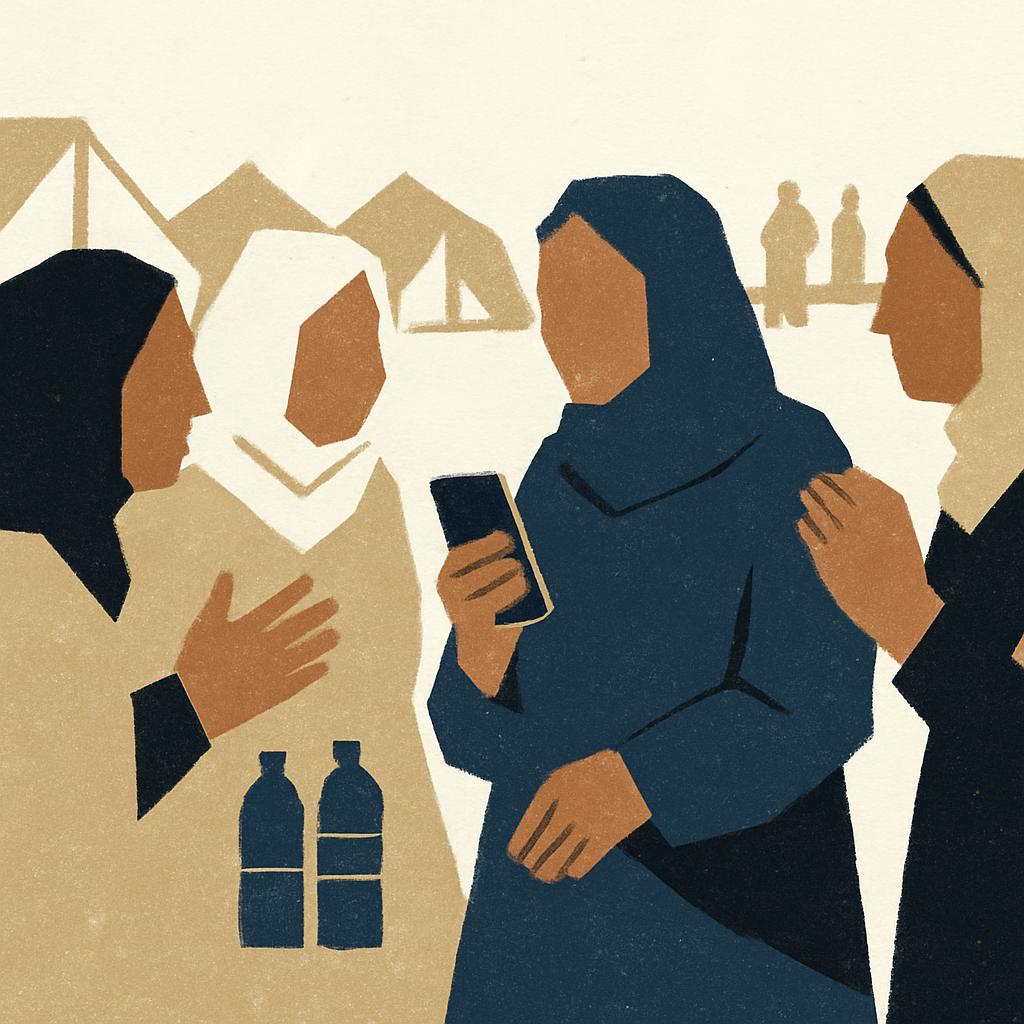
Women with disabilities encounter discrimination at twice the rate of their male counterparts, with 42% reporting barriers that stack gender bias on top of disability prejudice. For refugee women, this double burden becomes triple when cultural restrictions limit their movement and communication.
Male Guardianship Blocks Digital Access
In many displaced communities, women need male permission to own phones or access internet services. Research from Jordan’s Zaatari camp shows 73% of women with disabilities have no independent access to digital communication. They cannot privately contact support services, report abuse, or connect with other women facing similar challenges. A phone credit top-up becomes more than connectivity – it becomes autonomy.
Private Channels Break Isolation
Sarah, a wheelchair user from Damascus now in Lebanon, describes her phone as her ‘secret lifeline.’ Through WhatsApp groups and disability rights apps, she connects with other women, shares resources about accessible housing, and receives mental health support without family interference. She applies monthly through our application system because consistent credit means consistent independence. When women control their own communication, they control their own advocacy.
Networks Build Resilience
Women with disabilities create powerful mutual aid networks when given private communication channels. They share information about accessible services, warn each other about discrimination, and provide emotional support across borders. These digital communities often become more reliable than formal support systems. Our mission focuses on ensuring these conversations never go silent due to empty phone credit.